
How to Choose and Apply the Right Shaft End Seal Grease for Twin-Shaft Concrete Mixers

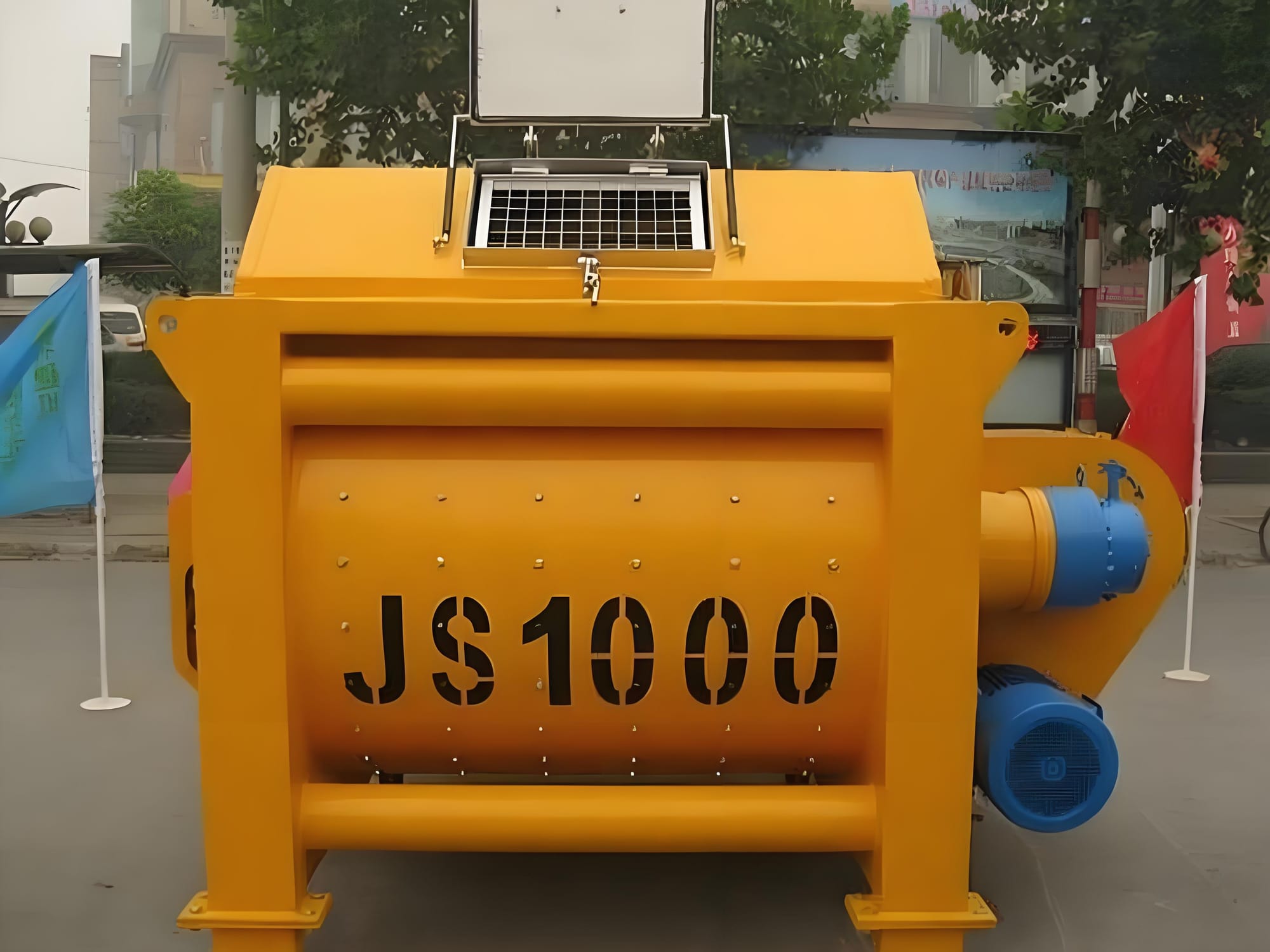
In commercial ready-mix concrete production, the shaft end seal assembly of a twin-shaft forced mixer is the single most critical mechanical wear zone. While mixing blades and liner plates are subjected to direct abrasive impact, the shaft end seals prevent a far more destructive issue: the migration of high-density cement slurry into the main rotor bearings.Concrete slurry is highly abrasive and alkaline. If the shaft end seals fail, fine quartz sand particles and cement paste slice through the seal lips, bypass the labyrinth rings, and enter the roller bearing housings. This causes immediate bearing seizure, shaft scoring, and severe electric motor overload. Replacing a seized mixing shaft bearing can cost thousands of dollars in components and days of unscheduled plant downtime.To prevent this catastrophic failure mode, automated lubrication systems must continuously inject heavy-duty, high-pressure grease to form a positive-pressure liquid barrier that flushes away cement dust.This engineering guide covers the mechanics of twin-shaft mixer seal configurations, defines the exact tribological specifications required for seal grease, and outlines troubleshooting protocols for automated lubrication networks.
1. Anatomy of Twin-Shaft Mixer Shaft End Seal SystemsUnderstanding why grease selection is so critical requires an analysis of how modern twin-shaft mixers (such as Sicoma, BHS Sonthofen, Teka, or Sany models) seal their main rotating shafts.
[Mixer Interior Slurry] ──► 1. Polyurethane Seal Ring ──► 2. Steel Labyrinth Rings ──► 3. High-Pressure Grease Barrier ──► [Main Bearing Housing]
A standard heavy-duty shaft end seal assembly utilizes a multi-stage defense barrier:
- The Primary Face Seal: A floating polyurethane or specialized elastomer seal ring that maintains contact with the rotating shaft to block coarse aggregate particles.
- The Steel Labyrinth Seals: A series of interlocking male and female precision-machined steel rings. The intricate path within the labyrinth makes it difficult for fine cement paste to migrate outward.
- The High-Pressure Grease Zone: This is the core defensive barrier. Specialized automated grease pumps inject lubricant directly into the center of the labyrinth rings. This grease must be maintained under constant positive pressure so it continuously oozes inward toward the mixing drum, flushing out any micro-fine sand particles before they can settle.
If the grease has incorrect chemical properties or fails to maintain the correct flow consistency, the positive-pressure barrier collapses, allowing abrasive grout to grind through the steel seals within hours.
2. Tribological Specifications: Decoding the Perfect Mixer GreaseDo not use standard automotive chassis grease or general-purpose industrial lubricants for concrete mixers. The operating environment inside a concrete batching plant involves extreme vibration, high alkaline water exposure, heavy shock loading, and continuous contact with abrasive mineral dust.When sourcing grease from industrial suppliers like Mobil, Shell, Klüber, or Fuchs, look for these four non-negotiable chemical and physical metrics:A. National Lubricating Grease Institute (NLGI) Consistency Grade
- The Metric: The grease must meet NLGI Grade 2 (Medium-soft consistency, similar to peanut butter).
- Why it matters: If the grease is too soft (NLGI Grade 0 or 1), it will liquefy under the mixer's operating temperatures and wash out of the labyrinth immediately, leaving the seal unprotected. If it is too stiff (NLGI Grade 3), automated centralized lubrication pumps will struggle to push it through narrow, cold distribution lines, causing system-wide blockages.
B. High Base Oil Viscosity
- The Metric: The kinematic viscosity of the base oil inside the grease must be at least 220 to 460 mm²/s (cSt) at 40°C.
- Why it matters: Concrete mixing generates heavy frictional loads. A high base oil viscosity ensures that the lubricant retains a thick physical film layer under extreme shear stress, preventing the steel labyrinth rings from rubbing together directly.
C. Extreme Pressure (EP) and Thickener Technology
- The Metric: Specify an Extreme Pressure (EP) Lithium-Complex or Calcium Sulfonate Complex thickened grease containing solid anti-friction additives (such as Molybdenum Disulfide - MoS₂, or Graphite).
- Why it matters: Calcium sulfonate complex thickeners possess natural water-resistance and high load-carrying capabilities. They do not emulsify or break down when mixed with alkaline water from the concrete slurry, maintaining an unbroken structural block against the paste.
D. Exceptional Water Washout Resistance
- The Metric: Water washout rating under ASTM D1264 must be less than 5% weight loss at 79°C.
- Why it matters: Automated plant washing cycles spray high-pressure water directly into the mixer drum. The grease must resist being displaced or dissolved by this washing process.
3. Automated Lubrication System Pressure and CalibrationManual hand-greasing is incapable of protecting a commercial twin-shaft mixer. Modern plants utilize fully automated, progressive centralized lubrication systems (such as Lincoln or SKF systems) driven by an electric grease pump.
[Electric Grease Pump (20 MPa)] ──► [Primary Progressive Distributor] ──► [4x Independent Lines] ──► [Shaft End Seals]
System Operational Parameters
- Pump System Pressure: The electric pump must generate an operating pressure between 15 MPa and 20 MPa (150 to 200 bar) to overcome the internal resistance of the concrete mix and flush out old material.
- Progressive Distribution: The pump discharges grease into a progressive block distributor. This distributor uses internal hydraulic pistons to allocate an absolute, equal volume of grease to all four shaft ends sequentially. If one line blocks, the entire progressive block locks up, triggering a system alarm on the plant's PLC control board.
Timing and Dose Calibration
- Pre-Lubrication Phase: The automated control software must be configured to run the grease pump for 30 to 60 seconds BEFORE the main mixer motors start spinning. This ensures the grease barrier is pressurized ahead of the first batch.
- Continuous Batch Injection: During mixing operations, the pump should inject approximately 2.0 to 3.5 grams of grease per shaft end per batch cycle (or run for 15 seconds every 5 minutes of continuous run time).
Technical Lubricant Procurement Reference TableUse this specification matrix to verify if your current grease warehouse supply matches industrial concrete manufacturing standards:markdown
Industrial Concrete Mixer Seal Lubricant Specification Matrix
| Technical Property | Testing Standard | Required Target Specification | Industrial Brand Matches (Examples) |
|---|---|---|---|
| Thickener Type | Chemical Analysis | Calcium Sulfonate or Lithium-Complex | Mobilgrease XHP 222 / Shell Gadus S3 V220C |
| NLGI Consistency | ASTM D217 | Grade 2 (Worked Penetration: 265-295) | Klüberlub BE 41-1501 / Fuchs Renolit CX-EP 2 |
| Base Oil Viscosity | ASTM D445 | 220 to 460 cSt @ 40°C | Mobil Centaur XHP 462 / Castroloba 2 |
| Four-Ball Weld Load | ASTM D2596 | Min 315 kg (3150 N) | Heavy-Duty Industrial EP Class |
| Water Washout Loss | ASTM D1264 | < 5% Max @ 79°C | Marine/Heavy Industrial Waterproof Grade |
| Solid Additives | Mechanical Blend | 3% - 5% $MoS_2$ or Graphite (Optional) | Heavy Shock Load Protective Grades |
Use code with caution.
4. Mechanical Troubleshooting Guide for Seal FailuresIf your mixer is experiencing premature seal failures despite using the correct EP2 calcium grease, use this engineering checklist to diagnose the system:
- Check for "Dry" Seal Outputs: Look at the discharge point on the outside of the mixer shell where the shaft exits the drum. You should see a uniform, ring-like collar of clean, slightly dirty grease oozing out. If the area is bone-dry or blowing dry cement dust, the lubrication line to that specific quadrant is ruptured or blocked.
- Inspect the Distribution Valve Pins: Progressive distributor blocks feature small mechanical indicator indicator pins that cycle back and forth as grease flows. If the pin stops moving, an internal piston is jammed by a particle of hardened dirt. Unscrew the progressive block segments, flush with solvent, and blow clear with compressed air.
- Verify Shaft Dynamic Runout: If the mixer bearings have experienced historical wear, the main shaft will exhibit dynamic runout (radial movement/wobble). Even the best grease cannot seal a shaft that moves eccentrically. Use a magnetic dial indicator against the shaft; if runout exceeds 0.5mm, the main shaft bearings must be pulled and replaced immediately.
Sourcing Wholesale B2B Industrial Lubricants & Seal KitsMaintaining automated mixing systems requires a reliable pipeline of high-performance lubricants and OEM-grade replacement seals. Overpaying for retail-packaged greases directly reduces your batching plant's net profit margins.If your company operates ready-mix concrete production infrastructure and requires wholesale pallet pricing on high-pressure EP2 calcium sulfonate grease cartridges, automated grease pump replacement assemblies, or complete polyurethane shaft end seal replacement kits for European or Chinese twin-shaft mixers (such as Sicoma, BHS, or Sany), our logistics network can assist. We bridge the gap between commercial fleet operators and certified chemical/mechanical manufacturers to provide bulk pricing with fast international maritime freight options
Request Technical Blueprints & Factory Quotes
Submit your machinery parameters below. Connect directly with verified, certified heavy industrial manufacturers to receive custom foundation drawings, layout schematics, and direct-from-factory pricing.