
Top 5 Reasons for Concrete Batching Plant Mixer Overheating and How to Fix Them

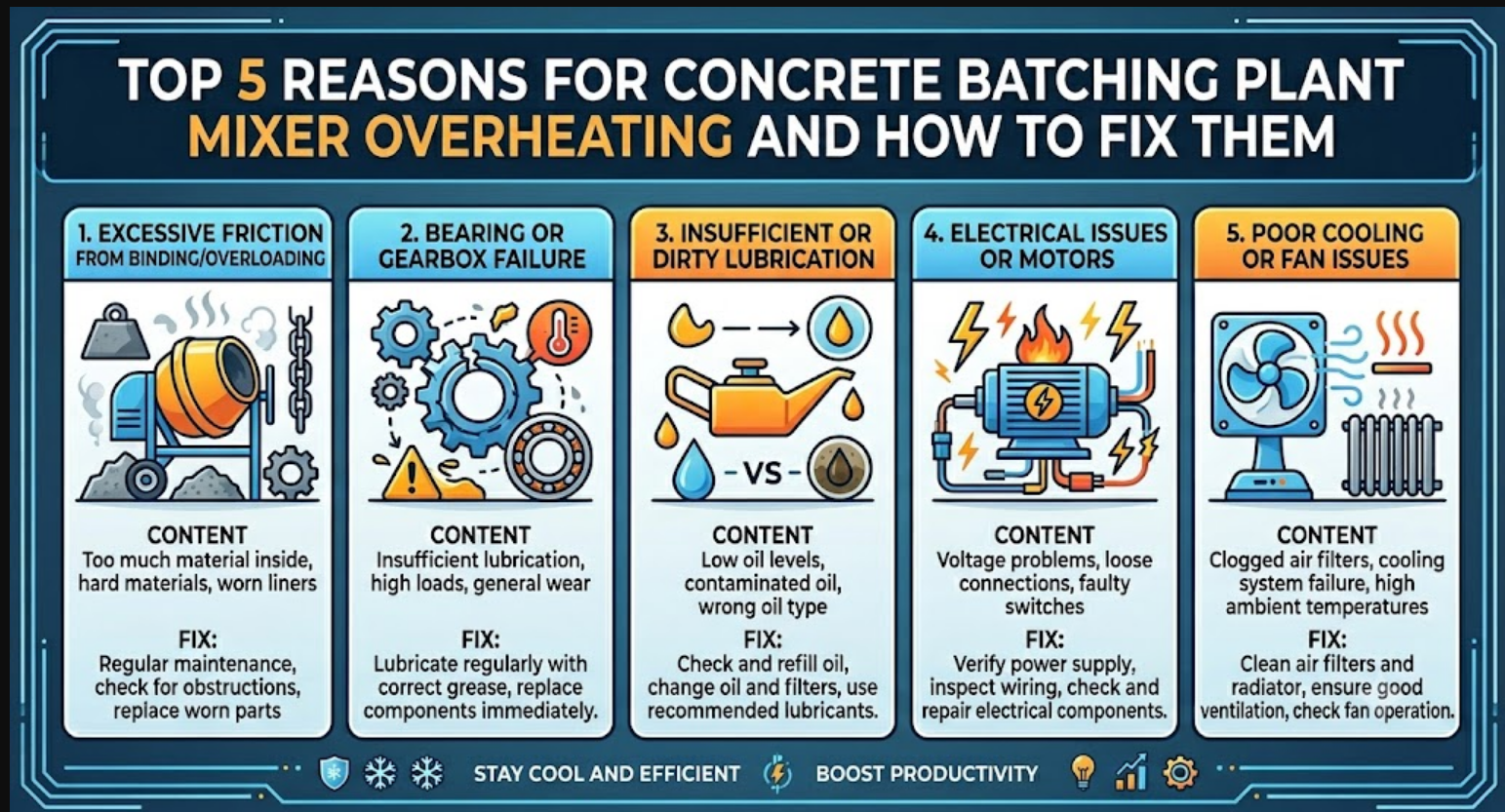
In a ready-mix concrete production facility, the twin-shaft or planetary mixer is the heart of the entire operation. Concrete batching plants operate on strict, minute-by-minute schedules. If the mixer motor overheats and trips the circuit breaker, the entire job site grinds to a costly halt. Worse, if concrete sets inside the drum during an unplanned shutdown, clearing the hardened material can take days and cause severe mechanical damage.An overheating mixer motor is rarely just a faulty electrical component. It is usually a symptom of underlying mechanical strain, improper lubrication, or incorrect raw material loading.This technical guide breaks down the top five engineering causes for concrete batching plant mixer overheating and provides direct troubleshooting solutions for plant mechanics and operators.
1. Excessive Mechanical Drag from Worn or Maladjusted Mixing BladesConcrete aggregate is highly abrasive. Over hundreds of operating hours, the mixing paddles, arms, and liner plates wear down. If the clearance between the mixing blades and the drum wall is incorrect, it causes severe structural drag.
- The Cause: When mixing blades wear out, the gap between the blade and the inner liner expands. Coarse aggregates (gravel and stone particles between 10mm and 20mm) get wedged into this gap. This creates immense friction, locking the shaft and forcing the electric motor to draw excessive current (amperage) to maintain its rotation speed, leading to rapid heat buildup.
- The Technical Metric: The standard operational clearance between the mixing blade and the liner plate must be maintained between 3mm and 5mm.
- The Fix: Check blade wear weekly. Adjust the blade mounting bolts to restore the 3mm–5mm clearance. If the blades have worn down past their adjustable range, replace them immediately with high-chromium cast iron replacements (minimum hardness rating of 60 HRC).
2. Inadequate or Contaminated Gearbox LubricationThe planetary or twin-shaft mixer uses heavy-duty reduction gearboxes to convert high-speed motor rotation into high-torque, low-speed mixing power.
- The Cause: If the gearbox oil level drops below the sight glass minimum, the gears run dry, creating extreme friction that transfers directly up the drive shaft to the motor. Additionally, fine cement dust can bypass worn oil seals and enter the gearbox, transforming the gear oil into an abrasive sludge.
- The Technical Metric: Industrial concrete mixers typically require heavy industrial gear oil with a viscosity rating of ISO VG 220 or ISO VG 320. The operating temperature of the gearbox should never exceed 80°C (176°F).
- The Fix: Inspect the gearbox oil seals daily for leaks. Flush and change the gear oil every 1,000 operating hours or every six months. If the oil appears cloudy or gray, cement dust contamination has occurred, requiring an immediate seal replacement.
3. Overloading and Incorrect Batching SequencesPushing a concrete mixer past its rated volumetric capacity is the fastest way to burn out the motor windings.
- The Cause: Plant operators often try to increase daily output by overcharging the mixer hopper. Furthermore, putting raw aggregates into the drum before adding water creates a dry, high-resistance paste that jams the mixing arms during the initial rotation cycle.
- The Technical Metric: Never exceed 80% of the mixer’s maximum dry-filling volume. For example, a standard JS1000 twin-shaft mixer has a dry charging capacity of 1,600 liters to output exactly 1,000 liters (1 cubic meter) of compacted wet concrete.
- The Fix: Recalibrate the aggregate batching software (PLC controls) to ensure the total weight matches the exact cubic-meter rating of the plant. Modify the charging sequence: Always introduce 20% of the batch water into the mixer first to lubricate the liners and blades before dropping the aggregates and cement.
4. Voltage Fluctuations and Single-Phasing in the Electrical PanelHeavy industrial motors require a balanced, stable power supply. Voltage drops place a massive thermal strain on electric motors.
- The Cause: In many emerging markets or remote infrastructure job sites running on diesel generators, voltage drops are common. If the supply voltage drops below the motor's rated specification, the motor must draw more current (amperes) to produce the same mechanical torque. This excess current generates extreme heat inside the copper stator windings (I²R electrical losses).
- The Technical Metric: The incoming 3-phase power supply must remain within ±5% of the motor’s rated voltage (e.g., 380V, 415V, or 460V). A voltage imbalance between phases exceeding 1% will cause a major temperature spike.
- The Fix: Install a digital multi-function power meter in the main control panel to monitor real-time amperage draw and phase voltage. Ensure the thermal overload relays and circuit breakers are matched precisely to the motor's Full Load Amps (FLA) rating specified on the nameplate.
5. Failure of the Automated Centralized Lubrication SystemOn modern twin-shaft mixers (such as Sicoma or BHS models), the main shaft end seals require continuous, high-pressure grease injection to prevent concrete slurry from grinding into the bearings.
- The Cause: If the centralized electric grease pump runs out of lubricant, or if a grease distribution line becomes blocked by dust, the shaft ends run dry. The mixing shaft bearings will rapidly overheat, creating an immense mechanical load that forces the main drive motor to work harder and overheat.
- The Technical Metric: The automated lubrication system should deliver an EP2 lithium grease at a minimum operational system pressure of 15 MPa to 20 MPa.
- The Fix: Check the grease reservoir level at the start of every shift. Inspect the transparent poly-tubing lines for air bubbles or blockages. Manually purge the lubrication lines weekly to ensure fresh grease is visibly discharging from all four shaft end seals.
Technical Troubleshooting Reference MatrixInsert this reference chart into your plant maintenance logs for quick diagnostic checks:markdown
| Symptom / Reading | Likely Root Cause | Immediate Corrective Action |
|---|---|---|
| High Amperage Draw + Normal Load | Voltage drop or phase imbalance | Test incoming 3-phase line voltage; check panel terminals for loose connections. |
| Motor Trips after 5 Mins of Mixing | Blade clearance too high (stones wedged) | Shut down, lock out tag out (LOTO), and adjust blade-to-liner clearance to 3mm–5mm. |
| Gearbox Case Temperature > 85°C | Low oil level or incorrect oil viscosity | Top up or flush gearbox using fresh ISO VG 320 industrial gear oil. |
| Squealing Noise near Shaft Ends | Centralized lubrication failure / dry bearing | Check electric grease pump function; clear blocked grease lines immediately. |
Use code with caution.
Sourcing Heavy Duty Concrete Mixer ComponentsReplacing worn mixing blades, high-torque reduction gears, or high-efficiency motors before a catastrophic failure occurs is vital to maintaining plant uptime.If your facility requires OEM-grade replacement parts, high-chromium liners, or customized mixing arm assemblies for European or Chinese twin-shaft mixers, our engineering logistics team can help. We connect ready-mix producers with global component manufacturers to provide direct wholesale pricing and fast international shipping.
Request Technical Blueprints & Factory Quotes
Submit your machinery parameters below. Connect directly with verified, certified heavy industrial manufacturers to receive custom foundation drawings, layout schematics, and direct-from-factory pricing.